
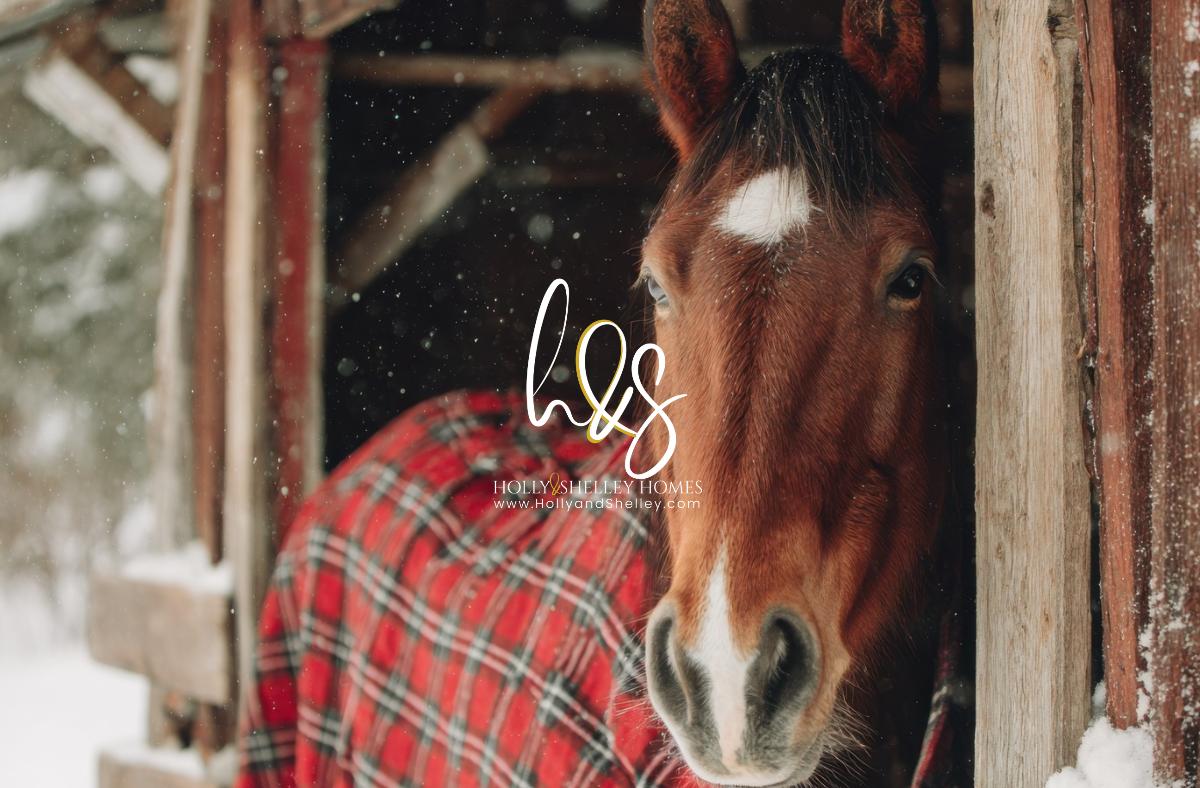
Ah, Texas winter. It’s 78 degrees on Tuesday and you’re in flip-flops. By Thursday a northern wind blows through, the temperature drops 40 degrees, and you’re out in the dark in your pajamas and muck boots, whacking ice off the water trough. Glamorous? No. Familiar? Oh, absolutely.
If you were here for the February 2021 freeze, you remember how fast things went sideways. So this year, we’re getting ahead of Old Man Winter. Here’s our winter horse care checklist for Texas horse folks around Liberty Hill and Central Texas. Grab your coffee (or hot cocoa, no judgment) and let’s go.
[Note: everything below is general care advice. Check with their own vet, especially for senior horses or horses with health issues.]
Water is Job #1
Here’s the thing about horses: they can be a little dramatic about cold water. When it’s icy, a lot of them just…drink less. And a horse that isn’t drinking is at higher risk of impaction colic, which is the last thing anybody wants to deal with at 2 a.m.
Heated buckets or tank heaters are worth every single penny. Just check the cords for curious chewers and plug them into outdoor-rated outlets. No heater? You and your rubber mallet are about to become besties. Break the ice at least twice a day. Bonus points for offering a bucket of warm water on cold mornings, since many horses drink more when it’s a little warm (honestly, same). And stash some backup water. If the pipes freeze or the power goes out, a few full barrels will make you feel like a genius.
Hay: The Original Space Heater
Fun fact: digesting hay and other forage actually produces heat, so hay keeps your horse cozy from the inside out. Grain just doesn’t pull the same weight. Think of a full hay net as a built-in furnace.
When a cold snap is coming, be generous with the hay, especially overnight. Stock up before the weather turns, too, because the feed store turns into the bread aisle at H-E-B right before a freeze. (You know exactly what we mean.) And keep that hay dry and off the ground. Moldy hay is a hard no in any season.
To Blanket or Not To Blanket? (Cue The Barn Debate)
Ask five horse people this question and you’ll get seven opinions. Here’s the short version: most healthy horses with a full winter coat and access to shelter handle Central Texas winters just fine, no blanket required. That fluffy coat traps warmth like a built-in puffer jacket, and a blanket can actually flatten it.
A blanket is usually a smart move if your horse is body-clipped, a senior or a hard keeper, underweight or recovering from an illness, or doesn’t have shelter from wind and rain.
Give Them a Place to Hide From The Wind
The real villain? Wet plus windy. A soaked coat stops insulating, fast. Horses don’t need a heated barn with a fireplace (though wouldn’t that be cute?). They do need a way to get out of the wind and rain. A run-in shed, a row of trees or a solid fence line all count. If you can, face open sheds away from that north wind.
Protect Your Pipes (Seriously)
This is the one everybody forgets until they’re standing in a puddle. Wrap exposed pipes and spigots in foam insulation, and find your main water shutoff now, not mid-freeze. Give it a test turn while you’re at it. Disconnect and drain your hoses so they don’t burst, and if you’re ever adding water lines, frost-free hydrants are an absolute game changer.
Safety Check The Barn
First things first: skip the heat lamps. Barns are full of hay, shavings and dust, and heat lamps are a serious fire risk. Check extension cords and outlets for damage, keep cords away from bedding, and make sure your fire extinguisher is charged and easy to grab. Boring? Maybe. Important? Very.
Pack a Freeze Kit
Before the first cold front rolls in, turn your tack room into mission control. Stock flashlights or headlamps with extra batteries, a generator and fuel if you have one, and at least a week’s worth of extra hay, feed and bedding. Toss in an ice mallet, some stored water and a few spare buckets. And save your vet’s number and the nearest emergency vet clinic in your phone so you’re not frantically Googling in the dark.
Mud Happens
Winter rain plus freezing nights equals mud, ice and the occasional surprise slide (for you and your horse). Spread sand or gravel in high-traffic spots like gates and water troughs, and keep an eye on those hooves for thrush.
Holly & Shelley’s Take: What Makes a Horse Property Winter-Ready
When we tour horse properties with buyers, we look past the pretty pasture. (Okay, we look at the pretty pasture too.) Frost-free hydrants, a well-built barn with good drainage, covered hay storage, solid windbreaks and power run to the barn all make winter so much easier, and they add real value when it’s time to sell.
Dreaming of acreage for your horses around Liberty Hill? We know horse properties, and we’re on your team. Reach out to Holly & Shelley anytime!